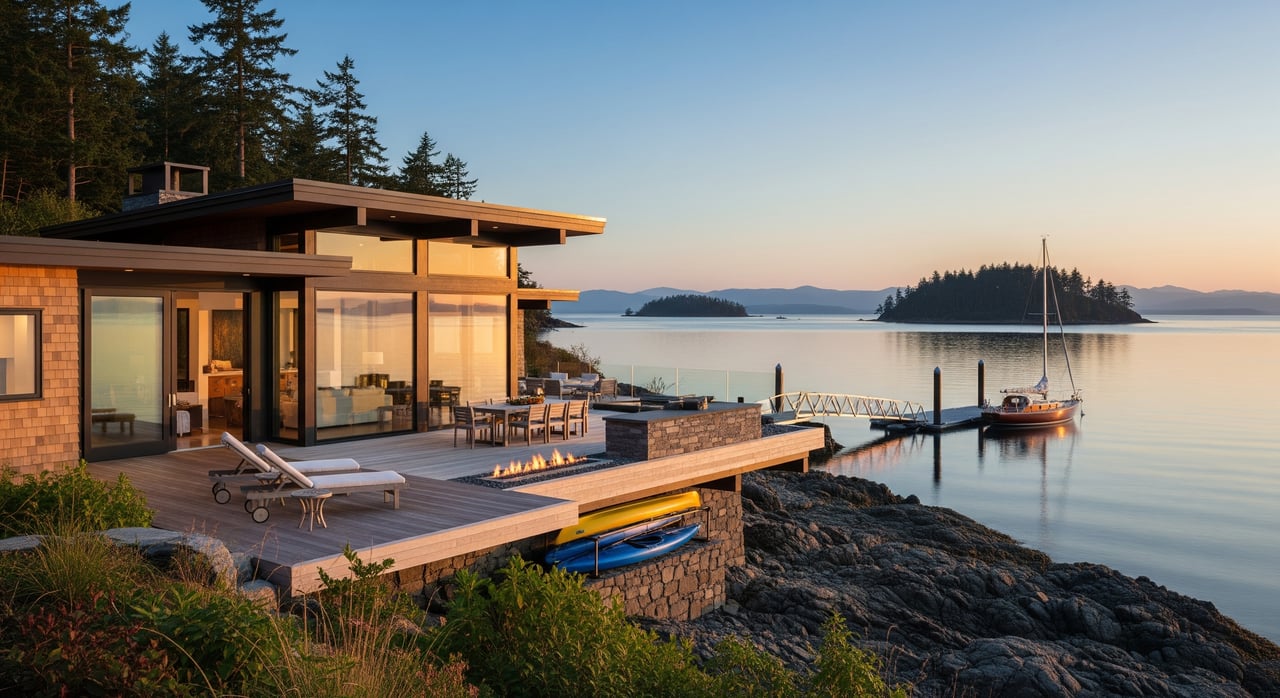
Craving a slower pace without giving up comfort and access? If you are weighing a second home in the San Juan Islands, you are not alone. The 98245 area around Friday Harbor offers a rare mix of natural beauty, privacy, and practical amenities that make weekend escapes and extended stays truly workable. In this guide, you will learn how the islands differ, how to plan travel and showings, what to expect with financing and insurance, and which permits and utilities matter most. Let’s dive in.
Choose the right island
Every island has a distinct feel. Your choice affects day-to-day convenience, privacy, maintenance logistics, and how easily guests and vendors can reach you. For background on services and civic resources, explore the official San Juan County site.
San Juan Island
If you want island life with reliable services, start here. Friday Harbor concentrates restaurants, grocery options, medical clinic and emergency services, marinas, and galleries. Luxury offerings range from waterfront estates to rural acreage. It is also the easiest base for guests and contractors, which simplifies ownership.
Orcas Island
Orcas draws you in with topography, forested land, and recreation around Moran State Park. Buyers often prioritize privacy, acreage, and sweeping views. Services are more limited than Friday Harbor, and the pace feels slower, which many second-home owners value.
Lopez Island
Flatter and more agricultural, Lopez offers calm, open vistas and a low-key lifestyle. It appeals if you want simpler island living and a strong community feel. Large luxury estates are less common, but the lifestyle value can be compelling.
Shaw and smaller islands
Shaw and islets like Stuart or Waldron suit owners who prize seclusion and are comfortable with minimal services. These properties can be extraordinary, but you should plan for self-sufficiency and more complex logistics.
Getting here and around
How you and your guests will travel shapes your ownership experience. Build in contingency time for weather and seasonal demand.
Ferries and timing
Vehicle and walk-on ferries connect Anacortes with Friday Harbor, Orcas, and Lopez. Schedules vary by season, and summer is busiest. Review current sailings and reservation policies on Washington State Ferries before planning showings. As a guideline, the Seattle-to-Anacortes drive is roughly 1.5 to 2 hours, and crossing times depend on route and stops. Arrive early during peak times and leave buffer between appointments.
Seaplanes and charters
Seaplanes and small-plane service shorten travel dramatically. Kenmore Air operates multiple daily flights from the Seattle area to Friday Harbor and other islands. Flight time is typically under an hour, which is ideal for quick visits or hosting. Note luggage limits, smaller group sizes, and weather sensitivity. Chartering a plane or helicopter is an option for maximum flexibility.
Showing logistics that work
- Plan 2 to 4 days on-island once you are serious. One day rarely captures access, neighborhood context, and seasonal conditions.
- Cluster showings and inspections, but pad your schedule for ferry or weather delays.
- If flying, arrange a car in advance. Vehicle inventory on-island can be limited, and many buyers prefer bringing a car by ferry for longer stays.
- Use remote tools to narrow choices first. Drone video, 3D tours, and live walk-throughs help you focus your shortlist before you travel.
- Confirm contractor availability early. Some trades are scarce and may charge travel time, which affects renovation budgets and timelines.
Financing and taxes
Luxury second homes in the islands often involve jumbo financing and additional reserves. Your plan for personal use or rental also influences loan type.
Second home vs. investment
- Second home: If you will use the property for personal, occasional occupancy and not for short-term rental, lenders often allow lower down payments than investment loans. Many require 10 to 20 percent minimum down, but each underwriter sets its own standards.
- Investment or short-term rental: If you intend to rent, lenders typically classify the property as an investment. Expect higher down payments, higher rates, and more documentation. Disclose any rental plans up front to avoid underwriting issues.
Jumbo expectations
Many island properties exceed conforming loan limits and require jumbo mortgages. Jumbo loans usually call for more documentation, larger cash reserves, and sometimes slightly higher rates. Lenders familiar with island properties can streamline approval, especially if you plan occasional rentals or need a property management strategy.
Taxes and closing costs
Washington’s property taxes vary by county levies and parcel specifics. For parcel-level inquiries and rates, consult the San Juan County Assessor via the San Juan County site. Washington’s Real Estate Excise Tax (state and county) applies on sales, along with standard closing costs. For high-value transactions or complex ownership structures, consult a CPA experienced with Washington tax and estate planning.
Insurance and hazard risk
Coastal and island settings introduce exposures that standard homeowners policies may not cover by default. Review:
- Flood: If the home is in a FEMA floodplain, lenders may require flood insurance. Confirm with the FEMA Map Service Center.
- Wind and storm: Waterfront and marine conditions may require additional coverage or riders.
- Earthquake: In Washington, earthquake insurance is separate. Many second-home buyers choose to add it.
- Wildfire and vegetation: Insurers may expect defensible space and ongoing vegetation management.
- Docks and bulkheads: Private docks and bulkheads often need special riders, and some policies exclude damage to marine structures.
Ownership and operations
Owning on an island can be seamless if you understand the utility mix, shoreline rules, and day-to-day operations from the start.
Water, septic, power, broadband
- Water: Many properties rely on private wells or community systems. Verify well yield and water quality, and review seasonal variability and records with the county.
- Septic: Most rural homes use on-site systems. Obtain inspection and as-built records, and understand potential upgrade costs and standards. The Washington State Department of Health provides guidance on onsite systems through its Onsite Sewage Program.
- Electricity: Service is provided by Orcas Power & Light Cooperative (OPALCO) across the islands. Check for line easements, capacity, and rates through OPALCO.
- Broadband and cell: Coverage varies by location. Some owners use satellite solutions when fiber is not available. If you plan remote monitoring or frequent video conferencing, confirm options before you commit.
Shoreline and dock rules
Shoreline work, docks, and bulkheads fall under Washington’s Shoreline Management Act and the county’s Shoreline Master Program. Permits are required for docks and major shoreline modifications, and critical areas can add restrictions or mitigation. For current rules and permit pathways, start with San Juan County Planning & Community Development. Tidelands and intertidal areas involve state ownership regimes and public access rules, so confirm where private rights end and what approvals are necessary for moorage.
Short-term rental and land use
If you envision short-term rentals, verify local code and any required permits before you buy. Rules evolve, and unpermitted STRs can create legal and lending issues. County planning codes, accessory dwelling unit standards, and any subdivision covenants can limit or prohibit certain uses. Use the San Juan County site to review current regulations and licensing.
Maintenance and staffing
Seasonal weather and salt exposure require thoughtful maintenance. Plan for winterization, periodic property checks, and vendor schedules in advance. Large tree work or shoreline landscaping may require permits, especially in critical areas. Skilled trades can book out, so secure your team early.
Due diligence checklist
Use this list to streamline your evaluation and protect your investment:
- Title and land: Full title report, parcel map, shoreline designation, and any recorded covenants or HOA rules.
- Septic and water: Septic inspection and as-built records, pumping log, dye test if applicable, well flow and water quality results, and proof of permits.
- Shoreline and environmental: Previous dock or shoreline permits, county critical-area or shoreline buffers, wetlands review, and FEMA flood zone determination via the FEMA Map Service Center.
- Utilities: Electrical capacity, line easements, OPALCO rate information, and broadband options.
- Structure and systems: General home inspection, roof, pest, and electrical assessments; insurance loss history, if available.
- Access and logistics: Ferry or flight plans, vehicle arrangements, moorage availability, and proximity to emergency services.
- Operations: Property check program, snow and storm prep, vendor list for plumbing, electrical, landscaping, and boat yards.
How I help
For luxury second-home buyers, clear planning saves time and reduces risk. I pair a disciplined, CPA-informed approach to valuation and contracts with white-glove coordination that fits your schedule. You will get high-quality visual previews to narrow choices, a smart showing plan that accounts for ferry or flight timing, introductions to experienced lenders for jumbo and second-home loans, and guidance on inspections, shoreline permits, and insurance. When you are ready, I help you structure a clean, compelling offer and set up a practical ownership plan for worry-free enjoyment.
If you are considering a second home around Friday Harbor or elsewhere in the San Juan Islands, let’s talk about your goals and timeline. Connect with Lisa Turnure to explore available properties and receive exclusive listings.
FAQs
What should a Friday Harbor second-home buyer budget for travel time?
- Plan 1.5 to 2 hours to drive Seattle to Anacortes, then a schedule-dependent ferry crossing. Seaplanes from Seattle to Friday Harbor often take under an hour, subject to weather.
How do I choose between San Juan, Orcas, and Lopez for a second home?
- Start with your priorities: services and easy logistics (San Juan), privacy and topography (Orcas), or calm, low-key living (Lopez). Visit each for a full day to experience access, amenities, and seasonal pace.
What loan type fits a San Juan Islands second home?
- Personal-use second homes may qualify for lower down payments than investment loans, while planned short-term rentals are usually treated as investments with higher down payments and rates. Many purchases require jumbo financing.
Which permits matter for waterfront homes with docks?
- Docks and major shoreline work typically require permits under the Shoreline Master Program. Confirm with San Juan County Planning & Community Development before you buy.
How do I verify septic and well systems on an island property?
- Obtain as-built records and inspection reports for septic, plus well flow and water quality tests. The Washington DOH Onsite Sewage Program outlines standards and helpful resources.
Where can I check current ferry schedules for showings?
- Review sailings and reservation policies on Washington State Ferries and build buffer time into your itinerary, especially in summer.
How can I track market activity in 98245 and Friday Harbor?
- Your broker can provide live MLS updates from the Northwest Multiple Listing Service to monitor new listings, price changes, and accepted offers that match your criteria.