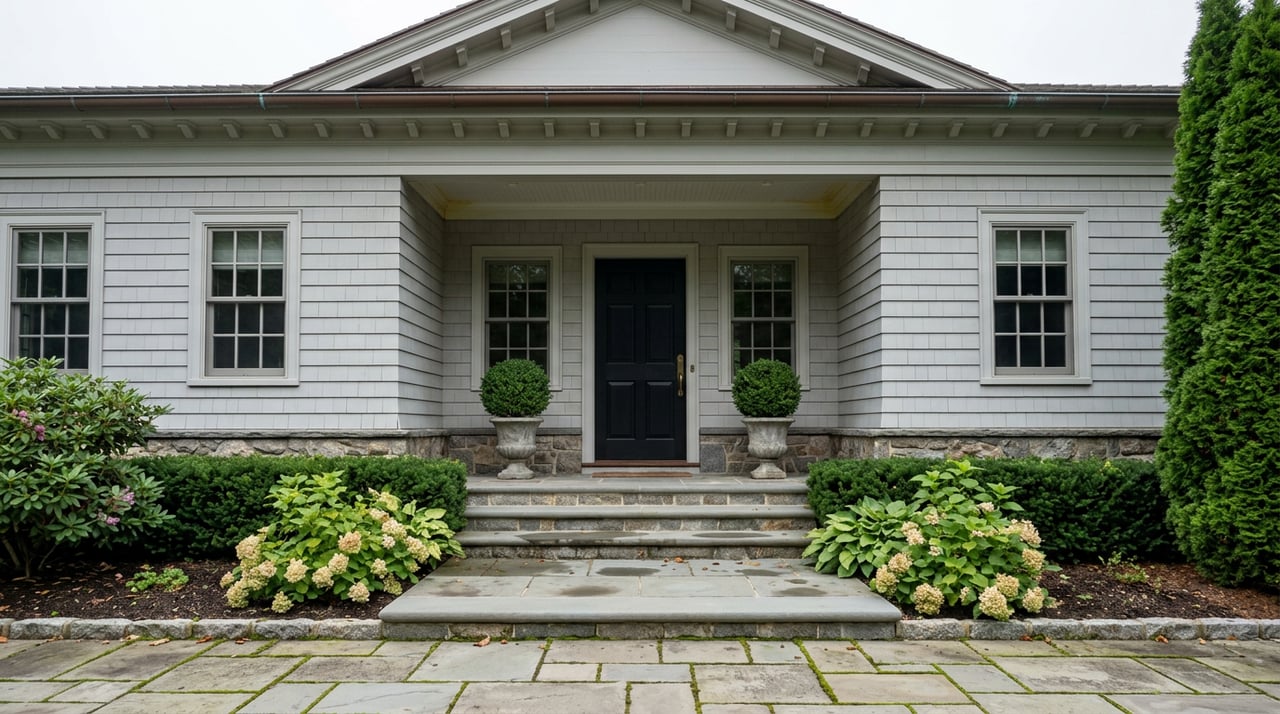
The guard waves you through, the fairway opens up on your left, and for a moment it feels like the golf course belongs to whoever lives behind that gate. It doesn't. Gated communities built around a private golf course are rare inside Seattle's city limits, and Broadmoor is the clearest example of one, which creates a specific and common misunderstanding: that buying a home here comes bundled with a locker, a handicap card, and a tee time.
It doesn't work that way. The neighborhood gate and the golf club are two separate institutions with two separate approval processes, and conflating them is the kind of assumption that costs a buyer real time during due diligence. Here's what actually separates the two, what each one costs, and why Broadmoor's sales data behaves nothing like the rest of Seattle's market.
Two Gatekeepers, Two Applications
The manned guard station at the entrance controls who drives into the neighborhood. It has nothing to do with who gets to play the course. Broadmoor Golf Club states plainly on its own membership page that admission is by invitation only, through the sponsorship of an existing active member. There is no waiting list you sign up for and no application you submit cold. Someone already inside has to bring you in.
That means a buyer can close on a home with a wraparound fairway view and still have no standing at the club itself. The HOA governs the streets, the landscaping standards, and who's allowed past the gate as a resident. The club governs who gets a bag tag. Homeownership satisfies the first. It does nothing for the second.
This is worth sitting with if the golf course view is part of why you're looking at Broadmoor in the first place. The course is the backdrop. Whether you ever set foot on it depends on relationships that exist independent of the deed.
What Actually Gets You Through the HOA Gate
The neighborhood association itself has its own cost structure, separate from anything club-related. As reported by local sources familiar with the community, buyers pay a one-time move-in assessment calculated at 0.417 percent of the settled purchase price, plus monthly HOA dues that have run in the $200 to $500 range. On a home selling near Broadmoor's recent median of roughly $5.4 million, that move-in fee alone works out to about $22,500, due at closing, on top of the purchase price itself.
Monthly dues in that range aren't unusual for a gated community with private security and shared landscaping. What's worth flagging is that dues figures like this shift over time as HOA boards adjust budgets. Across the Seattle area, 58 percent of listings carried a non-zero HOA fee in 2025, part of a broader climb in these costs as more HOA-governed housing moves through the resale market. The number to trust is whatever appears on the seller's current resale certificate at the time you write an offer, not a figure gathered months earlier. Ask for it early. It affects your monthly carrying cost the same way property tax does.
The Membership That Isn't For Sale
Broadmoor Golf Club has been operating on the same sponsorship model since it opened for play in 1927. There's no published initiation fee schedule because the club doesn't sell memberships to the public in the way a resort course sells a card. Access runs through relationships: a current member vouches for a prospective one, and the process moves at the pace of that relationship, not a calendar.
This is not unique to Broadmoor. A few blocks away in Madison Park, the Seattle Tennis Club, founded in 1890, sits on eight acres of Lake Washington waterfront with nineteen courts, a boathouse, and private beach access, and it operates as its own separate members-only institution with no automatic tie to any address nearby. Living close to a private club and belonging to one are two different things across this entire pocket of Seattle. Buyers moving from markets where country club membership is a line item you simply pay for should recalibrate that expectation before touring homes.
A Market Too Thin to Read Like the Rest of Seattle
Here's the number that changes how you should read everything else about this neighborhood: Broadmoor closes roughly one home sale a month. Across the six months ending August 2026, the median sale price for single-family homes in Broadmoor sat near $5.4 million, at roughly $1,118 per square foot on a typical home of about 4,838 square feet. Compare that to Seattle citywide, where the median sale price over the three months ending June 2026 was $890,000.
The gap in price is expected. The gap in sample size is what actually matters for a buyer trying to price a home or negotiate an offer. Seattle as a whole sells thousands of homes a month, which means its median and its days-on-market figures are genuine trend lines built on volume. Broadmoor sells somewhere around twelve homes a year. A single unusually fast or unusually slow closing can swing the neighborhood's average meaningfully. When a listing site shows Broadmoor's luxury inventory sitting at three active homes with a median asking price near $4 million and an average of 34 days on market, that's not a statistical trend. That's a snapshot of three transactions.
Practically, this means comp-based pricing arguments that work in a normal Seattle neighborhood don't transfer cleanly here. There often isn't a recent, comparable sale close enough in size, condition, and timing to build a confident valuation off of. Appraisals and offer strategy both have to lean more heavily on the specific home and less on the neighborhood average, because the neighborhood average is built from too few data points to carry much weight on its own.
It also explains something that puzzles buyers touring the neighborhood: lot sizes stay small even as prices climb into eight figures. The subdivision was platted in the 1920s and 1930s and the lot lines haven't moved since. The premium here has never been about acreage. It's about the address, the course frontage, and the gate, all of which were fixed decades before today's prices existed.
What This Means If You're Comparing Broadmoor to Other Close-In Options
A buyer cross-shopping Broadmoor against Madison Park or Washington Park is really choosing between two different bundles. Homes in Madison Park and Washington Park sit close to the same Arboretum trails and the same lake access without a gate, without an HOA move-in assessment, and without the guard-station approval step for guests and contractors. What Broadmoor adds is the address, the security perimeter, and proximity to a golf course that still requires its own separate invitation to actually use.
Neither bundle is objectively better. They're priced for different things, and the club membership question is the one most likely to get skipped during a fast tour. If access to the golf course specifically is part of your decision, ask early who in the neighborhood might sponsor you, because that conversation takes longer than closing on the house does.
FAQ
Does buying a home in Broadmoor include membership at Broadmoor Golf Club? No. The neighborhood HOA and the golf club are separate organizations. Club membership requires sponsorship by an existing active member and isn't conveyed by owning property inside the gates.
How often do homes in Broadmoor actually sell? Recent data shows roughly one closed sale a month across the neighborhood, which keeps the sample size small enough that a single transaction can shift the reported median or average days on market noticeably.
Is HOA approval the same as the golf club's membership approval? No. HOA approval governs whether you can purchase and reside in the neighborhood. Club membership is a separate, invitation-only process tied to sponsorship, with no formal connection to home purchase or HOA standing.
If you're weighing Broadmoor against another close-in Seattle enclave and want the real numbers behind a specific listing, including what current HOA dues actually run and how a thin comp set affects your offer strategy, Lisa Turnure can walk through the specifics with you. Receive Exclusive Listings before they reach the broader market.