Wondering what really makes Laurelhurst feel different from other Seattle neighborhoods near the water? For many buyers, the answer starts with lifestyle, not just square footage. If you are exploring Laurelhurst for its private beach club, lake access, and established housing stock, this guide will help you understand how those pieces come together and what they can mean for real estate decisions. Let’s dive in.
Laurelhurst Lifestyle at a Glance
Laurelhurst sits on a hilly peninsula along the western shore of Lake Washington, east of the University of Washington. King County places it north of Union Bay and south of Magnuson Park, while Seattle Parks notes the neighborhood center sits high on a hill with views toward Lake Washington.
That setting shapes daily life. You get a water-adjacent neighborhood with a strong residential feel, mature streetscapes, and a long-standing civic identity that has been part of the area for more than a century.
Seattle historical materials show the Laurelhurst Community Club formed in 1920 to improve and beautify the neighborhood. Over time, it also pushed for transit, the local school, and the playfield, which helps explain why Laurelhurst still feels organized around community amenities rather than just individual homes.
Why the Beach Club Matters
The Laurelhurst Beach Club is one of the neighborhood’s most talked-about lifestyle features. It is a private membership club for active members and invited guests, and eligibility is limited to owners and residents of qualifying single-family parcels within the club boundary.
That limited access is important in real estate terms. Not every home in greater Seattle can offer a private, boundary-based lake club connection, which gives qualifying Laurelhurst properties a distinctive lifestyle story.
The club’s current published membership structure lists a $4,000 initiation fee, plus annual dues of $785 for households of three or more and $265 for households of two or fewer. Membership is tied to one tax parcel, and renters within the boundary may apply for seasonal membership, though that option does not include voting privileges.
Beach Club Amenities and Summer Rhythm
The Beach Club is centered on active lake use. Its amenities and programming include sailing, kayak and stand-up paddleboard use, youth swim lessons, and a sailing tradition that goes back to at least the 1920s.
For many households, that matters because it turns the lake into part of everyday life. Instead of admiring the water from a distance, members can build routines around it, especially during Seattle’s summer season.
The family programming is a major part of that appeal. The club offers youth swim lessons and sailing camps for children roughly ages 5 to 14, making it feel less like a passive membership and more like a recurring summer anchor.
Public Recreation Adds Depth
Laurelhurst’s appeal is not limited to the private club. Public recreation is also concentrated here in a way that is unusual for a single Seattle neighborhood.
Laurelhurst Playfield includes ballfields, tennis courts, a children’s play area, and meadow space. Tennis court reservations are handled through Amy Yee Tennis Center, which adds structure and accessibility for regular use.
The Laurelhurst Community Center adds another layer of neighborhood activity. It offers both drop-in and registration-based programs, and it reopened in fall 2024 after accessibility upgrades.
This mix of private and public amenities helps explain Laurelhurst’s broad appeal. Even for buyers focused on architecture, views, or lot size, the neighborhood’s recreation options support a more complete day-to-day lifestyle.
Laurelhurst Real Estate Character
Laurelhurst has depth as a residential district, and that shows in its housing stock. The area was first platted in 1906 and annexed in 1910, but homebuilding did not accelerate until the 1920s because access was difficult.
That timeline helps explain why so much of the neighborhood feels established rather than recently assembled. Official Seattle landmark materials document early homes in Tudor Revival, English Cottage, and French Provincial styles, especially in the Belvoir subdivision on the west end.
At the same time, Laurelhurst is not a frozen historic district in the everyday market sense. King County reports homes here were built from 1900 to the present, and a recent sales sample includes properties from 1912 and 1926 alongside homes from the late 1990s, 2000s, and 2020.
A Mixed-Era Neighborhood
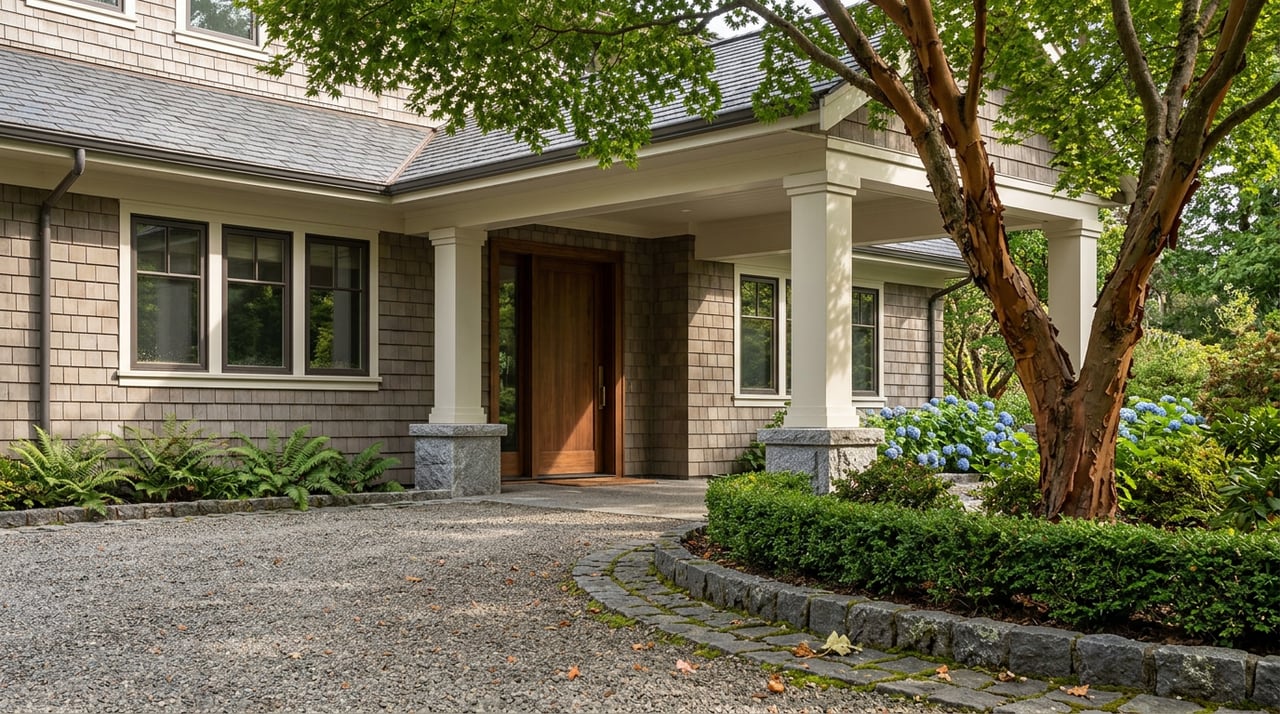
That range gives buyers options. You may find interwar architecture with period detail, midcentury homes from the 1950s, or newer construction that reflects more recent design priorities.
King County’s area report says much of Laurelhurst falls into upper residential grades, with a strong concentration of both non-waterfront and waterfront homes from the 1950s. In practical terms, that means the neighborhood often offers a mix of classic street presence, established lots, and homes that vary widely in finish level and renovation history.
This mixed-era character is one reason Laurelhurst can appeal to both buyers seeking architectural charm and buyers focused on long-term livability near the lake. It also means careful property-by-property analysis matters here more than broad assumptions.
Lots, Views, and Waterfront Exposure
One of Laurelhurst’s defining real estate advantages is the way topography creates view opportunities. King County reports that the neighborhood has about 1,686 parcels, including roughly 125 waterfront sites, and that about 30% of non-waterfront homes have some Lake Washington view.
That is meaningful because it creates more layers of desirability than a simple waterfront versus non-waterfront split. In Laurelhurst, a non-waterfront home may still offer an appealing water outlook, while a waterfront property adds a far more limited and exclusive dimension.
Typical home profiles also differ by setting. According to King County, typical non-waterfront homes are Grade 9, generally from the 1950s, with about 2,700 square feet, while typical waterfront homes are Grade 11 and closer to 5,000 square feet.
What Lot Sizes Tell You
Lot size is another key variable in Laurelhurst. King County sales samples show interior lots commonly in the mid-thousands of square feet, while waterfront parcels tend to be much larger.
In the cited sample, lot sizes range from about 4,500 to 19,188 square feet. That spread helps explain why homes in the same neighborhood can feel very different in privacy, scale, and outdoor use.
For buyers, that means lot analysis is not secondary. A home’s position on the peninsula, its grade, its view corridor, and its site dimensions can all affect both lifestyle and pricing.
What Drives Laurelhurst Pricing
Laurelhurst pricing appears to be shaped by several layers working together. The main factors include Beach Club eligibility, public recreation access, lake views, waterfront status, lot size, and the condition and era of the home.
Some of those factors are straightforward, such as waterfront frontage or larger parcels. Others are more nuanced, like whether a home pairs non-waterfront positioning with a meaningful view or whether it falls within the Beach Club boundary.
The market clearly treats scarcity seriously here. Waterfront access and club eligibility are among the most exclusive attributes, but they exist within a broader neighborhood where view homes and established housing stock also support demand.
There is no reliable published Laurelhurst-specific premium study in the research provided that quantifies a dollar value for Beach Club access alone. So the most accurate way to frame it is this: for qualifying homes, Beach Club eligibility can strengthen lifestyle appeal and buyer interest, even if the exact premium must be assessed case by case.
Price Ranges Need Context
Recent King County sales samples show sale prices spanning roughly $1.2 million to $7.9 million, depending on size, condition, view, and waterfront status. That is a wide range, but it fits Laurelhurst’s mixed housing eras and varied parcel characteristics.
A smaller interior lot with a modest house competes in a very different lane from a large waterfront estate. Even among non-waterfront homes, differences in renovation quality, outlook, and lot usability can materially change market position.
This is where neighborhood-specific valuation matters. In Laurelhurst, two homes with similar square footage may not perform similarly if one has Beach Club eligibility, stronger views, a better lot, or a more compelling architectural story.
What Buyers Should Watch For
If you are considering a Laurelhurst purchase, it helps to focus on the details that shape both lifestyle and resale strength. Not every attractive home will deliver the same long-term value drivers.
A smart review often includes:
- Whether the property is within the Laurelhurst Beach Club boundary
- The type and quality of any Lake Washington view
- Waterfront versus interior positioning
- Lot size and site usability
- Original character versus updated condition
- The home’s era and how that affects layout and systems
- Proximity to playfields, the community center, and other daily-use amenities
In a neighborhood with this much variation, the best opportunities are often the homes where several of these factors align well.
Why Laurelhurst Stands Out
Laurelhurst stands out because it combines private and public lifestyle assets in one established Seattle setting. A private beach club, active lake recreation, neighborhood playfields, a community center, and a wide range of architectural periods all shape the experience of living here.
For some buyers, the draw is direct waterfront living. For others, it is a view home with Beach Club eligibility and easy access to neighborhood amenities. In either case, Laurelhurst offers something increasingly hard to find: a water-oriented lifestyle with real neighborhood structure around it.
If you are evaluating Laurelhurst from an investment and lifestyle perspective, the key is to look beyond surface impressions. The most informed decisions come from understanding exactly how location, lot, view, housing era, and club access intersect at the property level.
If you are considering buying or selling in Laurelhurst and want a precise, discreet read on how a specific property fits this market, Lisa Turnure offers data-driven guidance tailored to Seattle’s premier neighborhoods.
FAQs
What is the Laurelhurst Beach Club in Seattle?
- The Laurelhurst Beach Club is a private membership club in Laurelhurst focused on lake access and water recreation, including sailing, kayak and SUP use, youth swim lessons, and sailing camps.
Who can join the Laurelhurst Beach Club?
- According to the club’s published membership information, eligibility is limited to owners and residents of qualifying single-family parcels within the club boundary, with one membership per tax parcel. Renters within the boundary may apply for seasonal membership.
Do all Laurelhurst homes include Beach Club access?
- No. Beach Club eligibility depends on whether a property is a qualifying single-family parcel within the club boundary.
What types of homes are in Laurelhurst?
- Laurelhurst has a mixed-era housing stock that includes early 20th-century homes, interwar styles such as Tudor Revival and English Cottage, many 1950s houses, and newer homes built more recently.
How common are water views in Laurelhurst?
- King County reports that about 30% of non-waterfront homes in Laurelhurst have some Lake Washington view, in addition to the neighborhood’s limited number of waterfront sites.
What affects Laurelhurst home values most?
- Key factors include waterfront status, Beach Club eligibility, lake views, lot size, home condition, and the property’s era and overall quality.